
Sun-heat film for city glass
Heat Control Window Film in New York City
When a July heat wave sits on the city, the hottest room in most apartments is the one with the most glass facing south or west. Heat control film stops a large share of that solar energy at the pane, before your air conditioner has to fight it.
 New York City
Where NYC Apartments Pick Up Solar Heat
Glass is the main way sun heat gets into a New York apartment. Brick and masonry walls absorb heat slowly, but a window lets solar energy straight in, where it warms the floor, the sofa and the air. On a humid August afternoon, a living room with a wide southwest window can run several degrees warmer than the bedroom on the courtyard side of the same unit.
Top floors get it twice. A walk-up apartment under a dark flat roof is already warm, and afternoon sun through the front windows piles on top of that. High floors in towers have no neighboring buildings to shade them, so they take the full arc of the sun from late morning until sunset. Those are the rooms where heat control film earns its cost.
Heat Control Film and Manhattan's Tilted Street Grid
Because Manhattan's grid is rotated about 29 degrees from true north, few windows face a compass point squarely. Units on the north side of a cross street look roughly south-southwest, so they take sun from late morning well into the afternoon. Avenue windows looking toward the Hudson face west-northwest, and in June and July the sun sets far enough north to shine almost straight down the cross streets and into that glass in the evening.
In practice we start with the glass that takes the afternoon and evening sun. A unit on Riverside Drive or a Hudson Yards tower facing the river carries the heaviest load, along with any south-southwest window that sits above the roofline of the building opposite. Windows that look into a narrow street with a tall building across it are shaded for much of the day and may not need heat film at all.
How Heat Control Window Film Rejects Solar Energy
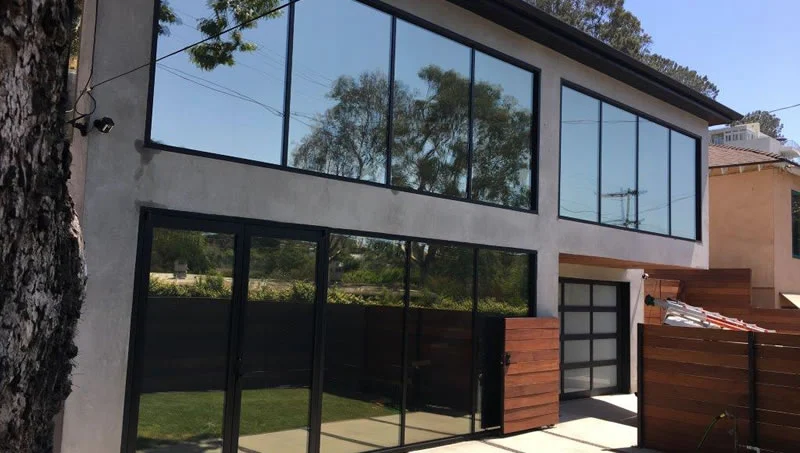
Sunlight reaching your window is roughly half infrared, which you feel as heat but cannot see. Heat control films use metal or ceramic layers to reflect or absorb a portion of that infrared, plus most ultraviolet and a chosen share of visible light. The figure to compare is total solar energy rejected. Higher numbers mean less heat inside.
There are two broad families. Reflective films reject the most heat for the money but have a mirrored look from outside and some reflection inside at night. Spectrally selective films are designed to pass much of the visible light while blocking infrared, so rooms stay bright. In buildings where the board cares about the facade, the selective films are usually the easier approval.
Heat Control Film on Window AC Rooms and Central Air Towers
Many prewar apartments still cool with window or through-wall units. Those units are sized for an average room, not one with a sunny wall of glass, and on the hottest days they run nonstop and still lose ground. Cutting solar gain at the window means the unit can actually catch up, and the room cools faster once the sun moves off the glass.
In condo towers with central air or fan coil units, the problem is uneven comfort. The perimeter near the glass bakes while the interior is fine. Film narrows that gap so the thermostat setting means something near the windows too. On Con Edison bills, the savings vary with your rate and usage, so we do not promise a dollar figure.

Heat Film, Insulated Glass and NYC Winters
Heat control film absorbs some energy, which warms the glass. On single-pane windows that is rarely a concern. On large insulated units, especially in towers along the waterfront in Long Island City or Battery Park City, a highly absorbent film can raise the inner pane's temperature enough to stress the glass. We check the glass makeup and use films rated for it.
People also ask whether blocking sun will make winters worse. In a steam-heated prewar building that already runs warm from October to April, losing some winter sun costs very little. In a drafty or north-facing apartment that relies on sun for warmth, we lean toward a lighter film or a low-E product that keeps heat inside in winter.
What Heat Control Film Does in NYC Homes
Lower Peak Temperatures Behind Sunny Glass
By stopping much of the solar energy at the glass, film keeps south and west rooms from heating as fast or as high during summer afternoons. The rest of the apartment stops being the place everyone retreats to on hot days.
Heat Film That Keeps Daylight in the Apartment
Spectrally selective heat films block infrared while passing most visible light. For apartments where daylight is already limited by neighboring buildings, that means less heat without making rooms feel like they have the blinds half drawn.
Less Strain on Window Air Conditioners
A window unit fighting full afternoon sun runs longer and louder. Reducing heat gain lets it reach the set temperature, cycle off sometimes, and keep up during heat waves when every unit on the block is working hard.
Heat Control Without Exterior Work
Film goes on the inside of the glass, so there are no exterior shades, awnings or scaffolding involved. For co-op and condo owners that keeps approval simpler and avoids touching the facade at all.
Heat Control Window Film FAQs for New York City
What temperature drop should I expect from heat film in a sunny NYC room?
We avoid quoting degrees, because a room's temperature also depends on its walls, its AC and whether the radiator riser runs through it. What we can give you is each film's rated solar energy rejection on your type of glass. Rooms where a big window is the main heat source notice the change most.
Which windows in my apartment need heat control film?
Start with glass facing southwest and west that gets direct sun in the afternoon, then unobstructed south-facing glass. Windows shaded by a building across a narrow street usually do not need it.
Will my co-op allow heat control window film?
Many do, especially for neutral, low-reflectivity films. Mirrored films are more likely to need board review because they change the facade. Check your alteration agreement and ask the managing agent before you schedule.
Can heat control film go on windows with a window air conditioner?
Yes. We film the glass above or beside the unit and leave the unit, its brackets and its side panels alone. The sash still opens if you need to remove the unit for winter.
Does heat control film work on cloudy days?
It works whenever sun hits the glass, but on cloudy days there is less heat to reject. The difference is most noticeable on clear summer afternoons, which is when NYC apartments need it most.
Window film quote
Request a Heat Control Window Film Quote in NYC
Note which rooms overheat, the direction they face and your floor. Measurements or pictures sent with the form let us start with the glass that matters most.
Prefer email? info@windowfilmnyc.pro