
Safety film for NYC buildings
Commercial Security Film in New York City
Glass is usually the weakest point in a commercial building's perimeter. Security film bonds to the inside of that glass so that when it breaks, from a hammer, a thrown object or storm debris, it stays largely in one sheet instead of falling into the space.
 New York City
Commercial Security Film for NYC Retail Corridors
High-value retail on Madison Avenue, in SoHo and along Fifth Avenue deals with smash-and-grab attempts, where speed is the whole plan. Plain tempered or annealed glass gives way in seconds. Film does not prevent the first blow from cracking the pane, but it keeps the fragments bonded, so getting a hand or a bag through takes many more strikes, a lot of noise and time.
Smaller shops face the same risk with less margin to absorb it. A neighborhood jewelry store, a phone repair shop or a pharmacy may lose more in a single break-in than the film costs. For those, a thick clear film on display windows and the glass door, plus a frame attachment where possible, is the usual starting point.
Security Film for Lobbies, Schools and Medical Offices
Building lobbies, private schools, houses of worship and medical practices use security film to buy time. The idea is that glass at the entrance or on ground-floor classrooms holds long enough for doors to lock, staff to respond and people to move away. The film has to be paired with access control and procedures, not used instead of them.
These clients often care just as much about looks. Lobby glass in a prewar building on the Upper West Side or a modern tower in Downtown Brooklyn is part of the building's image. Clear security films stay nearly invisible, and we finish edges neatly so the work does not look like an afterthought.
Schools and clinics also tend to have a lot of interior glass: sidelights beside classroom doors, glass partitions at reception, and vision panels in corridor doors. Filming those panes keeps broken glass off the floor where people walk, and on sidelights next to door hardware it stops someone from breaking the glass to reach the lock.
Frame Attachment for Commercial Security Film in NYC
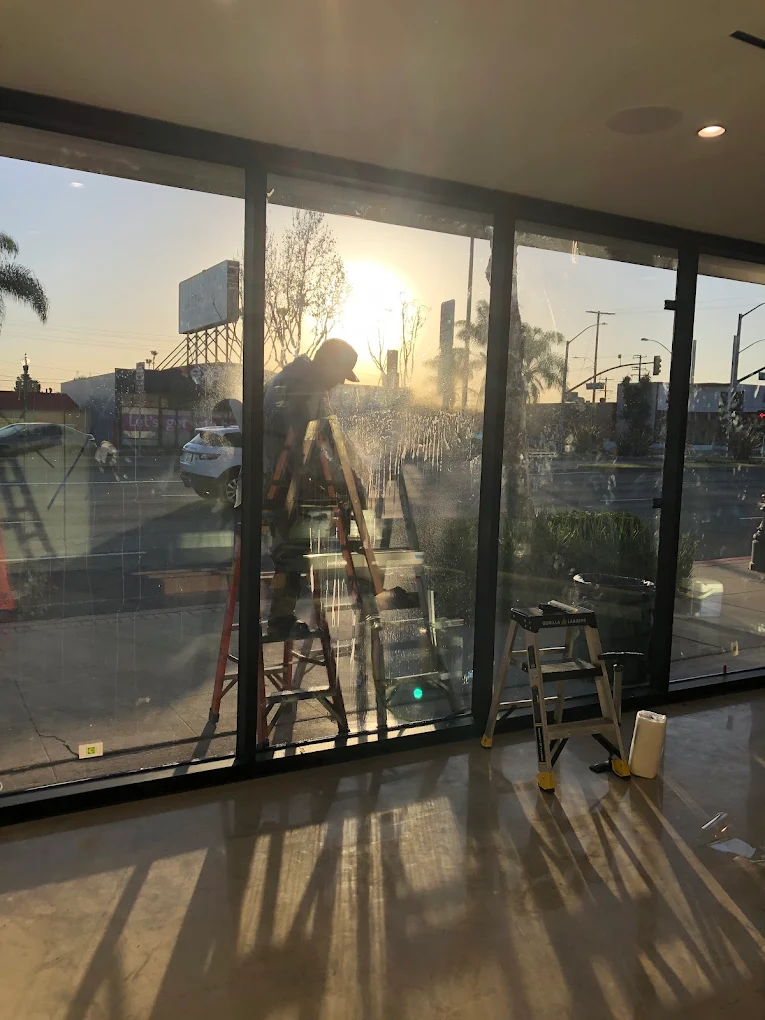
Under a big enough impact, a filmed pane can let go of its frame as one sagging sheet even though the fragments stay stuck together. Anchoring the film to the frame stops that, using either a structural silicone bead along the edges or a mechanical profile screwed into the frame. The sheet then stays in place under far more force.
Whether to attach depends on the frame. Aluminum storefront framing and steel window systems usually accept it well. Old wood frames or gaskets in poor condition may need repair first. We look at each opening and tell you where attachment makes sense and where film alone is the realistic option.
Security Film Specs From NYC Security Consultants
Some building owners, especially in Lower Manhattan and around government and financial offices, work with security consultants who specify glass protection to a particular test standard or threat level. When there is a specification, we follow it, including the film type, thickness and attachment method, and provide the product documentation the consultant needs.
When there is no consultant, we help you decide based on the actual risk. A boutique worried about smash-and-grab needs something different from a school concerned about intruders or an office tower thinking about storm debris near the harbor. We will not oversell a heavier product than your situation calls for.
What Commercial Security Film Does for NYC Buildings
Commercial Security Film That Delays Forced Entry
Bonded glass forces repeated strikes and creates noise and delay, which is what interrupts smash-and-grab theft and gives staff and alarms time to respond. It works around the clock without anyone having to arm it.
Less Flying Glass Inside the Building
When filmed glass breaks, shards stay on the film rather than spraying into a lobby, classroom or sales floor. That reduces injury risk from vandalism, accidents and storm debris.
Nearly Invisible Glass Protection
Clear security films do not change how a storefront or lobby looks. The building keeps its open, inviting appearance, and there is no need for visible bars or permanent shutters.
Security Window Film Without Replacing Glass
Upgrading to laminated security glass means new glazing, scaffolding or a lift, and downtime. Film is applied to existing glass from the inside, usually after hours, with the space back in use the next day.
Commercial Security Film FAQs for NYC Properties
Is security film the same as bulletproof glass?
No. Security film is not ballistic protection. It holds broken glass together and slows forced entry. Ballistic protection requires specialized glazing systems, which is a different product and job.
How long does commercial security film take to install?
A single storefront or lobby is often done in one session. Larger buildings are phased floor by floor or by elevation. Attachment systems add time for the sealant to cure.
Does security film work on tempered glass?
Yes. Tempered glass shatters into small cubes. Film holds those cubes together, so the opening stays covered instead of collapsing into a pile of glass.
Can security film be combined with anti-graffiti film?
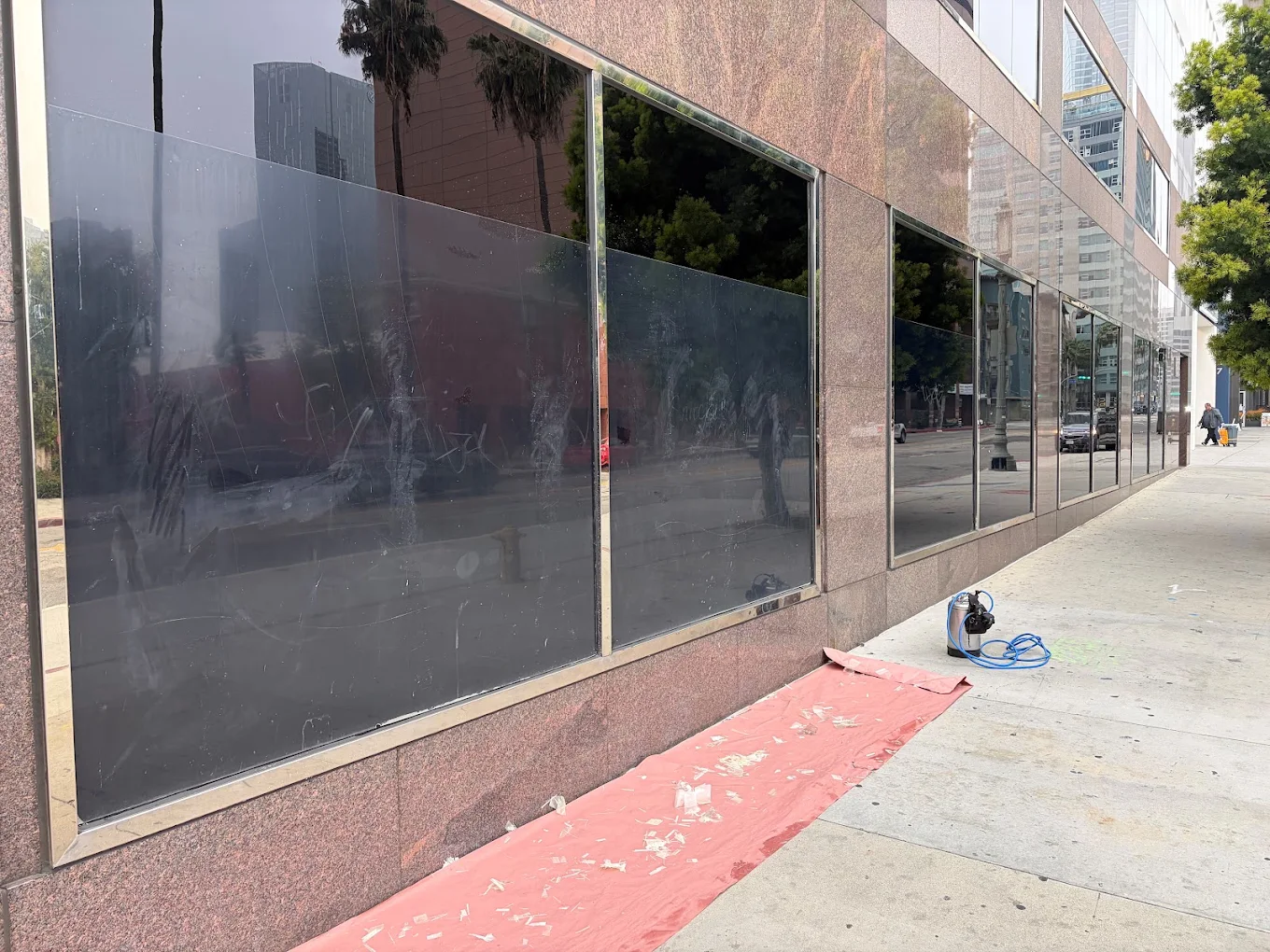
Yes, and on NYC storefronts the pairing is common. The security layer is applied to the room side, while a replaceable anti-graffiti sheet covers the street side to take scratches and tags.
Will security film help with storm damage?
It helps keep broken glass in place when debris hits a window. It is not a substitute for rated hurricane glazing, but it reduces the hazard from shattered glass during storms.
Window film quote
Request Commercial Security Film Pricing in NYC
Send the address, the openings you want protected, frame type and any consultant specification. We will recommend film and attachment options and give a written proposal.
Prefer email? info@windowfilmnyc.pro